Fear of spiders in children: what’s normal, and how to help
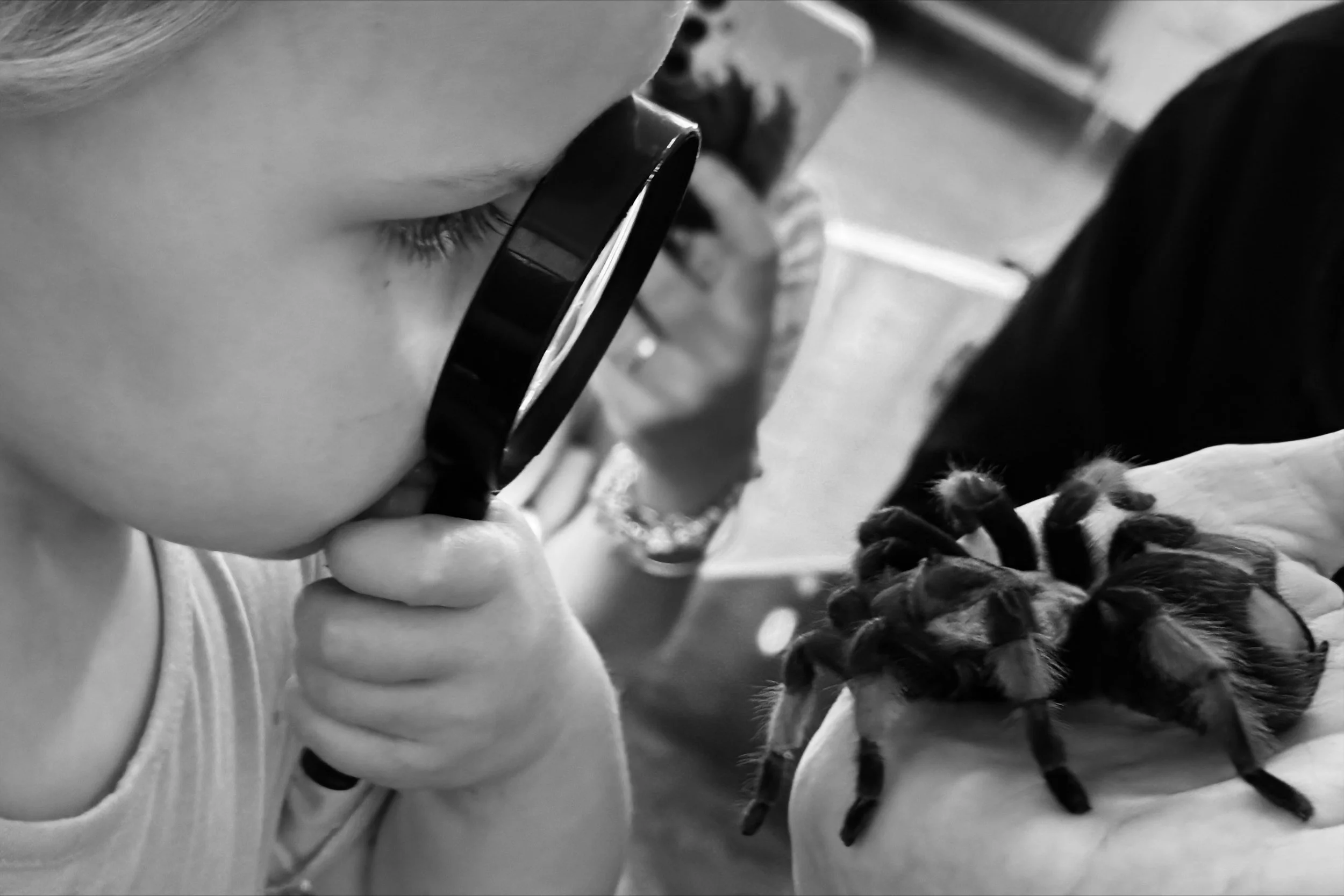
Fear of spiders is one of the most common childhood fears — even in children who are otherwise confident and curious.
For parents, it can be hard to know how to respond.
Do you encourage them to “be brave”?
Avoid spiders altogether?
Or try to help them get used to the idea?
The reassuring truth is this: fear of spiders is developmentally normal, and it doesn’t mean anything is “wrong”.
What matters most is how that fear is handled.
Why so many children are scared of spiders
Spiders are small, fast, unpredictable, and often surrounded by negative language — even unintentionally.
Children pick up fear from:
Adult reactions (“Ugh, a spider!”)
Stories, cartoons, and media
Not knowing what a spider might do
For young children especially, fear is often less about the animal itself and more about uncertainty.
What not to do when a child is scared of spiders
It’s tempting to reassure children by pushing them past fear — but this often backfires.
Try to avoid:
Forcing interaction or proximity
Using phrases like “don’t be silly” or “it won’t hurt you”
Comparing them to braver siblings or friends
These approaches can increase anxiety and teach children that fear should be ignored rather than understood.
A better approach: curiosity without pressure
Children don’t need to touch spiders to learn about them.
In fact, some of the most meaningful progress happens through:
Watching from a safe distance
Looking closely at pictures or videos together
Learning simple facts about how spiders move, eat, and behave
When fear is met with calm information rather than urgency, children often relax naturally — in their own time.
Observation is a valid way to engage
There’s a common assumption that exposure must involve physical contact.
But observation is powerful.
Seeing a spider handled calmly by a trusted adult, noticing that it isn’t aggressive, and understanding that it has clear boundaries can gently shift fear into understanding — without overwhelming a child.
For some children, this is enough.
For others, it becomes a stepping stone.
Both outcomes are completely valid.
Using safe, controlled experiences to build confidence
For families who do want to gently explore this fear further, structured animal experiences can sometimes help — when they’re done properly.
In calm, well-managed environments (such as school sessions, parties or 1-1 animal visits), children can:
Observe spiders without pressure
Ask questions in a safe setting
See adults model calm, respectful behaviour
Importantly, participation should always be optional. A child who chooses to watch rather than interact is still engaging meaningfully.
These experiences aren’t about “curing” fear — they’re about making fear feel manageable.
When fear is intense
If a child’s fear of spiders causes significant distress, panic, or avoidance, it’s okay to take things slowly — or pause entirely.
There is no deadline for overcoming fear, and not every child needs exposure experiences to thrive.
Gentle support, reassurance, and respect for boundaries go much further than pushing for bravery.
A final thought for parents
Fear of spiders doesn’t mean your child is timid, fragile, or falling behind.
It means they’re learning how to make sense of the world.
When fear is met with patience, information, and choice, confidence often grows quietly — sometimes in ways you don’t even notice at first.
And that’s more than enough.
Learn more about our sessions: