
What if someone is scared or doesn’t want to take part?
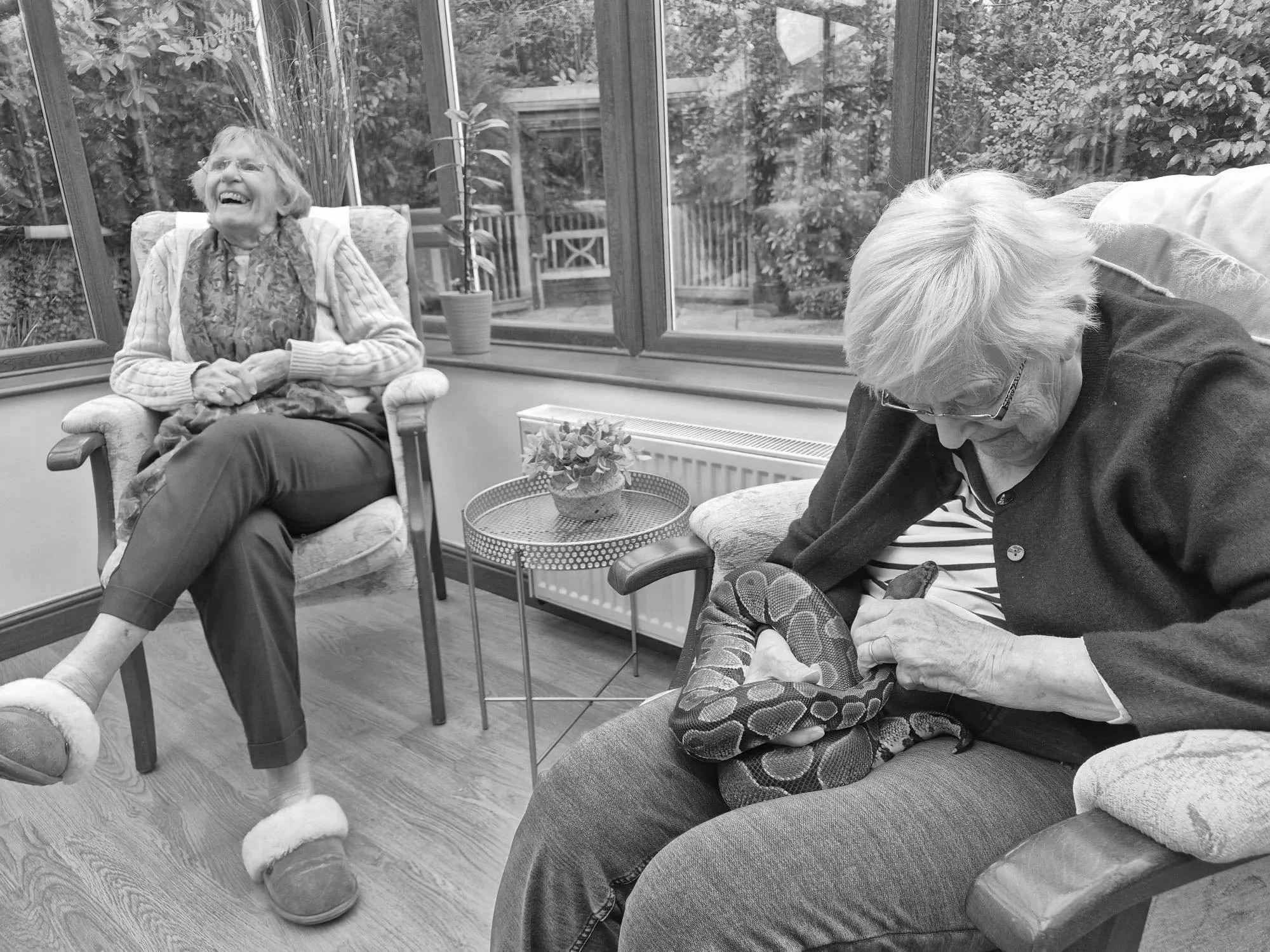
At Scaly Safari, participation is always optional.
That applies to everyone — children, adults, staff, teachers, carers, and anyone else in the room.
Watching, listening, asking questions, or keeping a little distance are all completely valid ways to take part. No one is ever pressured, coaxed, or singled out for opting out.
Being unsure isn’t a problem.
It’s something we plan for.
What “optional” really means in practice
Optional doesn’t mean technically allowed, but awkward.
It means:
No “go on, just try”
No coaxing or peer pressure
No spotlight moments
No assumptions about confidence or bravery
Some children are straight in, hands up, ready to meet everyone.
Some prefer to watch quietly for most of the session.
Some warm up slowly.
Some never want to hold an animal — and that’s absolutely fine.
All of those responses are treated as normal.
What opting out looks like in practice
Opting out doesn’t mean being excluded.
It might look like:
watching from a little further back
staying seated while others step forward
listening and asking questions without handling
leaving the room briefly and rejoining later
All of these are treated as normal, expected responses.
There’s no commentary.
No “go on, just try.”
No spotlight moments.
Why we don’t encourage people to push past fear
We don’t believe great experiences come from forcing discomfort.
Encouraging someone to override fear can:
increase anxiety
undermine trust
turn what could be a positive experience into a stressful one
Instead, we prioritise choice.
When people feel genuinely safe to say no, they’re far more likely to relax — and sometimes, curiosity follows naturally.
And if it doesn’t, that’s absolutely fine.
Adults are included in this too
It’s not uncommon for adults to feel embarrassed about being nervous — especially around children.
We’re very clear that adults don’t have to model bravery.
You’re welcome to:
observe quietly
step back
let someone else engage while you watch
opt out entirely
There’s no expectation that everyone in the room participates in the same way.
How sessions usually unfold
Most sessions follow a natural rhythm:
everyone starts together, watching and listening
handling is introduced gradually
people choose if and when they’d like to take part
questions are encouraged throughout
Some people join in later.
Some don’t at all.
Both outcomes are equally fine.
In short
No one ever has to take part in a way that makes them uncomfortable at a Scaly Safari session.
Not children.
Not adults.
Not anyone.
And often, knowing that is what makes the experience work..
Learn more about our sessions: