
Are reptile experiences suitable for anxious children?
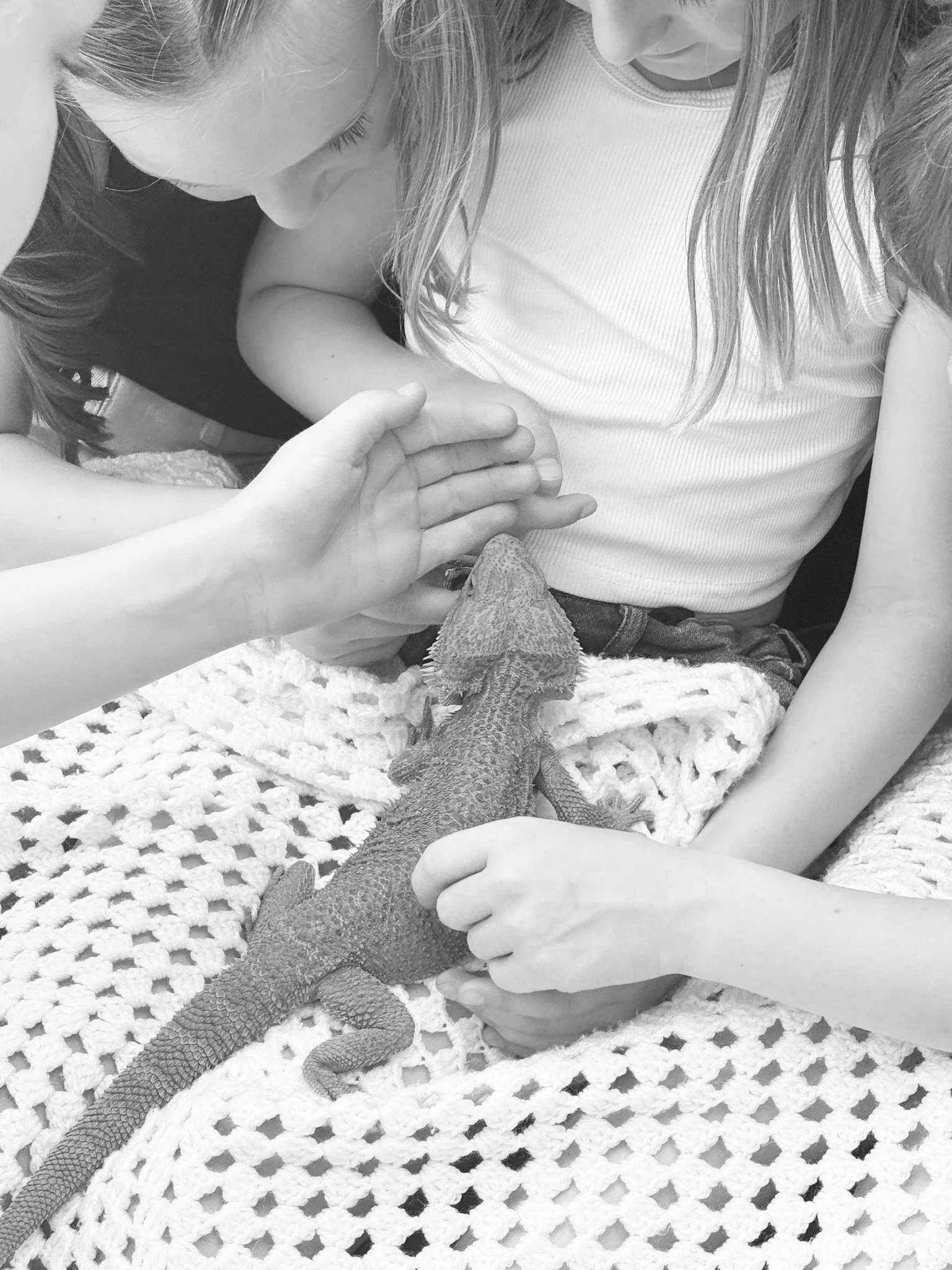
Short answer: they can be — when they’re designed properly.
At Scaly Safari, we regularly work with children who are anxious, cautious, sensitive, or easily overwhelmed. Some arrive excited but nervous. Some arrive unsure. Some arrive already convinced they won’t take part at all.
All of those responses are expected — and planned for.
Anxiety looks different in every child
Anxiety doesn’t always look like fear.
It can show up as:
hesitation or clinging
lots of questions (or none at all)
needing to observe first
withdrawing or staying very still
seeming disinterested when they’re actually overwhelmed
We never assume confidence or enthusiasm based on age, personality, or how a child behaves at the start.
Why reptile sessions can work well for anxious children
When approached gently, reptiles can be surprisingly well suited to anxious nervous systems.
They are:
calm and predictable
quiet and unhurried
not demanding attention
happy to simply be
There’s no sudden movement, loud noise, or expectation of interaction.
For some children, this creates a sense of safety that other animals — or high-energy activities — don’t.
But suitability depends on how the session is run
Anxious children don’t benefit from:
pressure to “be brave”
being singled out
sudden exposure
being watched while deciding
That’s why our sessions are built around choice and pacing, not performance.
What anxious children are never required to do
At Scaly Safari:
no child has to hold an animal
no child is encouraged to push past fear
no child is put on the spot
no reaction is treated as a problem
Watching quietly, staying close to an adult, or choosing not to take part are all completely valid.
What usually helps anxious children settle
We’ve found that the following make the biggest difference:
Starting together — no pressure to step forward immediately
Clear expectations — knowing they don’t have to do anything
Time — allowing curiosity to emerge naturally
Respect — seeing others’ boundaries honoured
Some children warm up slowly.
Some join in later.
Some don’t — and still leave feeling proud, calm, or curious.
All of those outcomes are positive.
When choosing not to take part is the success
It can be tempting to measure success by whether a child holds an animal.
We don’t.
For an anxious child, success might be:
staying in the room
watching from a distance
asking a question
feeling safe enough to say “no”
Those moments matter.
And often, they’re the foundation for confidence later — whether that’s in this session or a completely different context.
A note for parents and carers
If you’re wondering whether your anxious child will feel pressured, you can be reassured:
we don’t push
we don’t rush
we don’t frame fear as failure
You don’t need to prepare your child to participate.
You don’t need to encourage bravery.
You don’t need to apologise for their feelings.
We meet children exactly where they are.
In short
Reptile experiences can be suitable for anxious children — when calm, consent, and choice are built in from the start.
No child ever has to take part at Scaly Safari.
And for many anxious children, knowing that is what allows the experience to feel safe.
Learn more about our sessions: